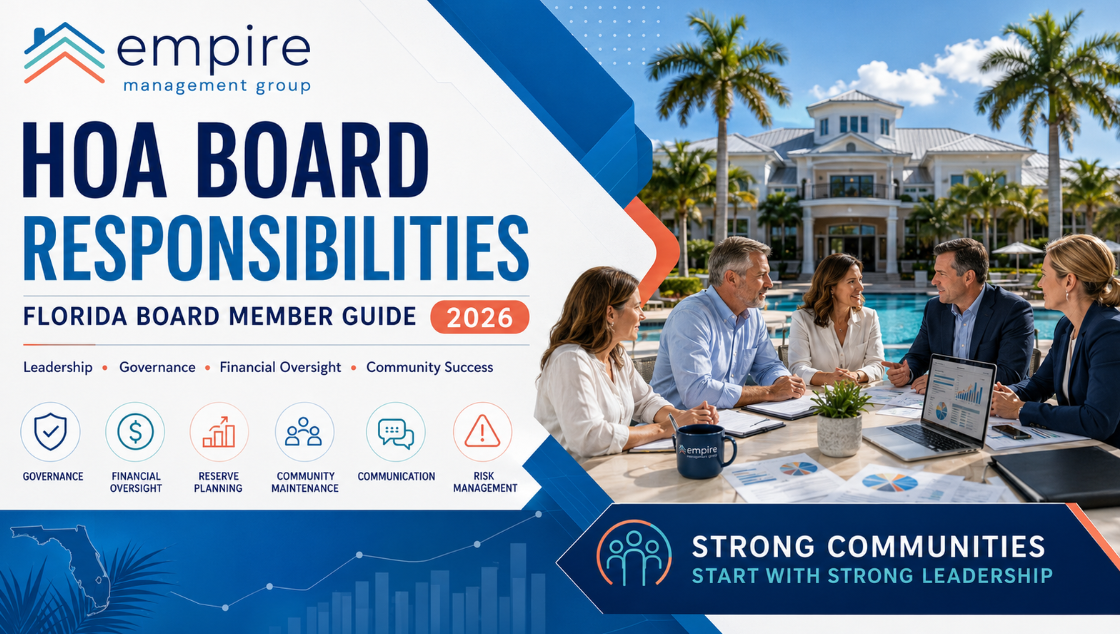
Florida HB 657: HOA Dissolution Bill Explained
(What Boards Must Know in 2026)
Florida community associations are facing one of the most significant legal discussions in years. A proposed bill known as Florida House Bill 657 (HB 657) could reshape how homeowner associations and condominium associations operate statewide.
This bill has gained attention because it introduces new language and procedures related to HOA governance, dispute resolution, and most notably the potential for HOA dissolution and termination.
For board members, homeowners, and community leaders, HB 657 is not just another “legal update.” If passed, it could impact how associations handle enforcement, disputes, community operations, and long-term decision-making.
At Empire Management Group, we serve communities across Florida including Sarasota, Tampa, Orlando, Clermont, Leesburg, Kissimmee, St. Augustine, Melbourne, and Daytona Beach. We believe proactive boards stay ahead of legal changes before they become emergencies.
If your community is reviewing management performance or considering a transition, you can request a proposal here:
What is Florida HB 657?
HB 657 is proposed Florida legislation that would update and expand laws related to community associations. It is intended to increase oversight and formalize procedures involving disputes, governance, and termination processes.
HB 657 applies to:
Homeowners associations (HOAs)
Condominium associations
Board members and community leadership
CAM professionals and management companies
Homeowners and voting members
To view the official bill details, you can reference the Florida Senate’s bill page here:
Why HB 657 Matters to Florida HOA and Condo Boards
Florida has one of the highest concentrations of HOA and condo communities in the United States. Associations manage major responsibilities that directly impact property values and quality of life, including:
financial oversight and budgeting
reserve planning
vendor and maintenance performance
architectural and violation enforcement
meeting compliance and records management
homeowner communication
insurance coordination
capital improvement planning
When boards are disorganized or when associations are poorly managed, homeowners often become frustrated. HB 657 appears designed to increase homeowner power and provide legal pathways to force change.
For Florida boards, this is a clear signal: transparency and professionalism are no longer optional.
The Most Talked About Part of HB 657: HOA Dissolution and Termination
The biggest reason HB 657 is drawing attention is that it proposes a structured legal process that could allow homeowners to pursue HOA dissolution in Florida.
Historically, dissolving an HOA has been extremely difficult. Governing documents, lender requirements, municipal agreements, and shared assets often make termination legally complex.
HB 657 attempts to define a process.
Step 1: Petition to Begin the Dissolution Process
Under the proposed language, the termination process may begin when a petition is signed by 20% of the voting interests.
This is significant because it creates a clear legal trigger. Even a relatively small portion of homeowners could initiate a formal process that requires board response.
Step 2: Required Board Meeting
Once the petition threshold is met, the board would be required to schedule a membership meeting within a defined timeframe to address the termination request.
This could prevent boards from delaying or ignoring homeowner concerns.
Step 3: Supermajority Vote Required
HB 657 proposes that a termination plan would require approval from:
Two-thirds (2/3) of all voting interests
This is a high threshold and ensures termination is not decided by only a small group of attendees at a meeting.
Step 4: Court Review and Oversight
HB 657 introduces the concept of a Community Association Court Program, which would provide a specialized legal process for HOA and condo association matters.
This could help standardize decisions and reduce inconsistent outcomes across different courts.
Step 5: Trustee Manages Assets, Liabilities, and Closure
After approval, a trustee would be responsible for closing out the association properly. That includes:
resolving debts and outstanding liabilities
managing contracts and vendor obligations
distributing assets if applicable
ensuring final legal recordings are completed
transferring responsibility of shared property
What Happens to Amenities and Shared Property if an HOA Dissolves?
This is one of the most important issues boards must consider.
Many HOAs and condo associations maintain critical assets such as:
retention ponds and stormwater systems
private roads and sidewalks
gated entry systems
pools, clubhouses, and recreation facilities
irrigation systems
lighting infrastructure
elevators and structural components (condos)
If an HOA dissolves, responsibility for these items must be legally assigned. Otherwise, communities may face maintenance collapse, insurance issues, or disputes over ownership.
This is why HOA dissolution is not as simple as “ending the HOA.” The legal and financial consequences can be major.
Other Key Changes Proposed Under HB 657
HB 657 is not only about termination. It also proposes updates that could affect everyday association operations.
Increased Legal Accountability for Board Actions
The bill continues Florida’s broader trend toward increasing legal scrutiny on community association governance.
Boards may need to improve:
meeting compliance
written communication
enforcement consistency
financial reporting transparency
recordkeeping procedures
Pressure to Modernize Governing Documents
Many Florida associations operate under outdated documents that no longer align with modern statutes.
HB 657 continues the direction Florida has taken in recent years: encouraging communities to update outdated language and processes.
Request a Proposal Today
Whether HB 657 passes as written or not, it reflects a growing demand for accountability and transparency in Florida community associations.
Boards that operate proactively will protect property values and community stability. Boards that ignore homeowner concerns may face increasing legal challenges and loss of community trust.
If your HOA or condo association needs help strengthening governance, improving financial reporting, or creating a better homeowner experience, Empire Management Group is here to help.