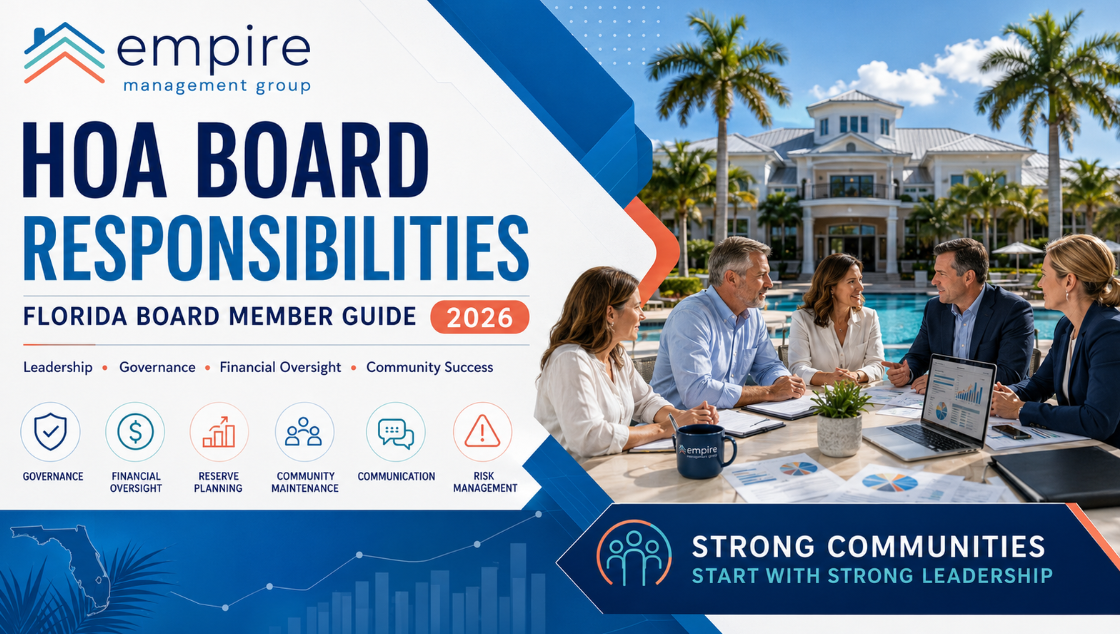
Florida HOA Board Meeting Rules Explained
(2026 Guide for Associations)
If you serve on a Florida homeowners association or condominium board, understanding Florida HOA board meeting rules is essential for maintaining compliance, transparency, and strong governance.
Under Florida law, associations must follow specific requirements related to notice, quorum, voting procedures, and homeowner participation. Failing to comply can expose an association to disputes, challenges, and operational instability.
This 2026 guide explains Florida HOA board meeting rules in clear language so associations across Orlando, Tampa, Sarasota, St. Augustine, Maitland, Clermont, and Leesburg can operate with confidence.
Associations that partner with experienced Florida HOA management companies often find compliance easier to maintain because procedures are structured and consistently documented.
👉 Services
Are Florida HOA Board Meetings Required to Be Open?
Yes with limited exceptions.
Under Florida Statute 720 (Homeowners’ Associations)
and Florida Statute 718 (Condominiums)
Most board meetings must be open to members.
Homeowners generally have the right to attend meetings except in specific situations such as:
Attorney-client privileged discussions
Personnel matters
Litigation strategy sessions
Transparency is not just best practice it is a statutory obligation under Florida law.
For associations working with professional condo management companies, ensuring open meeting compliance is a core governance responsibility.
What Is a Quorum for a Florida HOA Board Meeting?
A quorum is the minimum number of board members required to conduct official business.
Most governing documents define quorum requirements. In many associations:
A majority of board members must be present to establish quorum.
Without quorum, votes cannot be binding.
Before any motion is passed, quorum must be confirmed and documented in the minutes.
Professional HOA management firms ensure quorum procedures are recorded accurately to protect the association.
Do Homeowners Have the Right to Speak at Meetings?
Yes.
Florida statutes provide members with the opportunity to speak on agenda items.
However, boards may adopt reasonable rules regarding:
Time limits
Speaker order
Sign-in procedures
Clear meeting structure reduces conflict and ensures discussions remain productive.
Associations that invest in structured meeting governance often experience fewer disputes and smoother operations.
What Records Must Be Kept?
Florida associations must maintain:
Official meeting minutes
Voting records
Financial reports
Meeting notices
These records must be made available to homeowners upon request under Florida records inspection laws.
Proper documentation is essential for any association working with a reputable HOA association management company to maintain legal and financial protection.
Common Board Meeting Mistakes in Florida HOAs
Even well-intentioned boards sometimes make procedural errors such as:
Failing to provide adequate notice
Conducting votes outside official meetings
Not documenting motions clearly
Blurring executive session boundaries
Allowing discussions without a structured agenda
Small compliance missteps can create significant disputes later especially in communities experiencing financial stress or rising insurance premiums.
Associations across Florida are navigating increased scrutiny related to budgeting, reserves, and operational transparency. Well-run meetings are foundational to strong governance.
Why Board Meeting Structure Matters More Than Ever in 2026
Florida associations are operating in an environment shaped by:
Rising insurance premiums
Increased reserve scrutiny
Legislative updates
Higher homeowner expectations
Financial pressure in condominium communities
Board meetings are where financial clarity, vendor accountability, and long-term planning intersect.
When processes are clear:
Financial reports are reviewed before meetings
Agendas are structured
Decisions are documented
Homeowners understand outcomes
Meetings move efficiently and trust increases.
Strong governance supports stable communities whether in Orlando, Tampa, Sarasota, St. Augustine, Maitland, Clermont, or Leesburg.
Frequently Asked Questions About Florida HOA Board Meeting Rules
Are Florida HOA board meetings public?
Yes. Most board meetings must be open to members under Florida Statutes 720 and 718, with limited exceptions.
How much notice is required for an HOA meeting in Florida?
Generally 48 hours for regular meetings and 14 days for certain special meetings.
Do homeowners have speaking rights?
Yes, with reasonable time and procedural rules allowed.
What happens if an HOA fails to provide proper notice?
Actions taken at the meeting may be challenged or invalidated.
Strengthening Board Governance in Florida Associations
Understanding Florida HOA board meeting rules is essential but applying them consistently requires structure, documentation, and oversight.
Associations that prioritize clear processes, financial transparency, and statutory compliance position themselves for long-term stability.
If your association is reviewing governance practices or operational procedures, consulting with an experienced Florida HOA and condo management team can help ensure compliance and efficiency.
Need Help Navigating Florida HOA Board Requirements?
Associations across Orlando, Tampa, Sarasota, St. Augustine, Maitland, Clermont, and Leesburg must stay compliant while managing real-world operational challenges.
Understanding statutory requirements is one thing. Executing them consistently is another.
Boards that prioritize structured governance, transparent communication, and professional oversight tend to experience fewer disputes and smoother operations.
Learn more about how structured HOA management supports compliance here:
👉 https://empirehoa.com/