Published September 2026 | Last Reviewed September 2026
Fall is an important planning season for homeowners associations and condominium associations across Florida. As boards prepare for year-end responsibilities and the year ahead, now is the time to review budgets, maintenance priorities, reserve planning, vendor relationships, resident communication, and upcoming community events.
For more than 30 years, Empire Management Group has helped HOA and condominium association boards throughout Florida navigate the financial, operational, and administrative responsibilities of community management. Since 1993, our team has supported communities throughout Central Florida and across the state with professional [HOA management → INTERNAL LINK TO EMPIRE HOA MANAGEMENT PAGE], [condominium association management → INTERNAL LINK TO EMPIRE CONDO MANAGEMENT PAGE], financial oversight, maintenance coordination, board support, technology, and resident communication.
Whether your community is preparing its next annual budget, evaluating major maintenance projects, reviewing vendors, or developing priorities for the coming year, early planning can make a significant difference.
1. Begin HOA and Condo Budget Planning Early
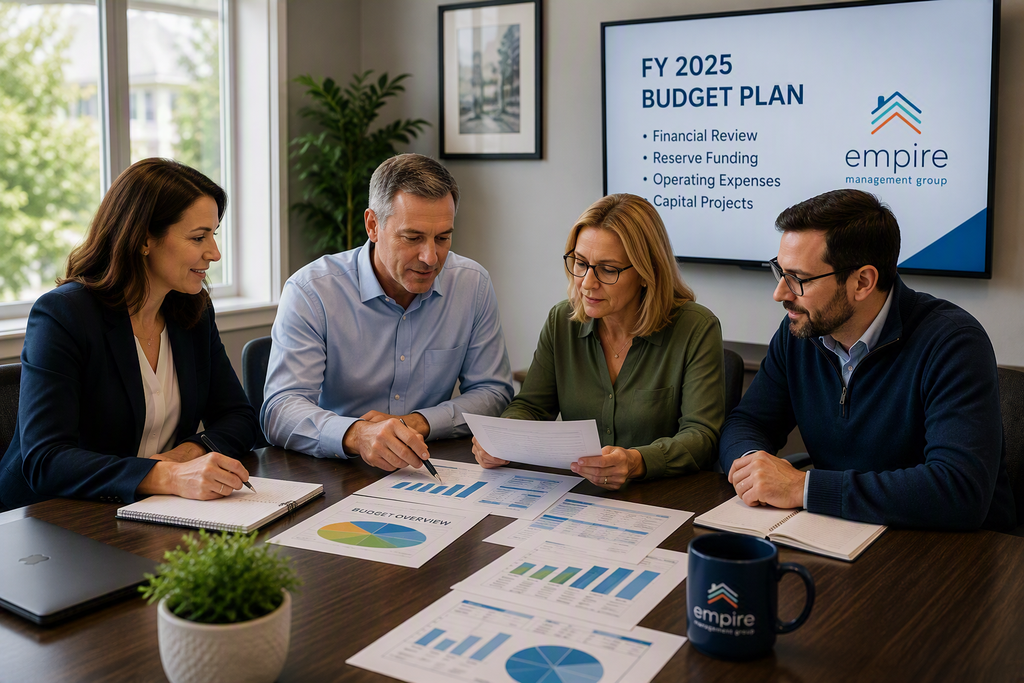
For many Florida community associations, fall is an important time for annual budget preparation. Starting early gives board members and management teams more time to evaluate current expenses, identify upcoming projects, review reserve needs, and prepare for potential changes in operating costs.
Key areas boards should review include:
- Landscaping and grounds maintenance contracts
- Property and association insurance costs
- Utilities and recurring operating expenses
- Reserve funding and applicable reserve study recommendations
- Maintenance and capital improvement projects
- Vendor contracts and service agreements
- Administrative and management expenses
- Expected community projects for the upcoming year
For condominium associations, reserve planning deserves particular attention. Florida’s condominium requirements have continued to evolve, making it important for boards to understand which requirements apply to their association and incorporate applicable obligations into long-term financial planning.
Florida condominium associations can review current condominium laws and guidance through the [Florida Department of Business and Professional Regulation → EXTERNAL LINK].
EXTERNAL LINK TO USE:
https://www2.myfloridalicense.com/condominiums-and-cooperatives/
Hyperlink the words “Florida Department of Business and Professional Regulation.” Do not display the full URL in the published article.
A carefully developed association budget gives board members greater visibility into the community’s financial position and can help boards anticipate expenses rather than simply react to them.
3. Strengthen Communication With Homeowners
Clear communication is one of the foundations of effective HOA and condominium association management.
During the fall and holiday season, communities often have multiple projects, meetings, events, office closures, maintenance schedules, and year-end announcements happening simultaneously.
Boards should consider communicating:
- Upcoming board and membership meetings
- Budget information and important deadlines
- Maintenance schedules
- Community projects
- Holiday office schedules
- Community events
- Emergency and severe-weather information
- Amenity updates
- Association reminders
Using several communication channels can improve visibility. Depending on the community, this may include association websites, resident portals, email, text messaging, newsletters, social media, and community signage.
The goal should be more than simply sending information. Effective community association communication should make important information easy for homeowners to find, understand, and act on.
Consistent communication can also help board members, management teams, and residents remain aligned on community priorities and expectations throughout the year.
4. Plan Community Events That Bring Residents Together
Successful community association management is not limited to budgets, maintenance, and compliance. Creating opportunities for residents to connect can also contribute to a stronger sense of community.
Fall provides many opportunities for HOA and condominium communities to introduce seasonal events and resident programs.
Ideas include:
- Fall festivals
- Food truck nights
- Outdoor movie nights
- Community volunteer projects
- Holiday decorating contests
- Resident appreciation events
- Family activity nights
- Community markets
- Seasonal social events
- Community sports and recreational activities
For lifestyle and amenity-rich communities, boards can also begin developing the following year’s event calendar during the fall.
Planning earlier provides additional time to coordinate venues, vendors, sponsorship opportunities, resident communications, budgets, and amenity availability.
A strong community calendar can help transform common areas and amenities into opportunities for residents to build meaningful neighborhood connections.
5. Evaluate Community Association Vendors
Reliable vendor partnerships are essential to successful HOA and condominium operations.
Before renewing contracts for another year, boards and community managers should evaluate whether current vendors continue to meet the association’s expectations.
Questions to consider include:
- Is the vendor consistently meeting service expectations?
- Is communication responsive and professional?
- Is the association receiving appropriate value?
- Are contract terms and pricing still competitive?
- Have the community’s needs changed?
- Are there recurring service concerns that should be addressed?
- Will additional services or projects be required next year?
- Does the vendor maintain appropriate licensing and insurance when required?
Vendor management should extend beyond finding the lowest price. Boards should consider reliability, communication, experience, insurance requirements, quality of work, responsiveness, and the vendor’s ability to meet the specific needs of the association.
An experienced [community association management company → INTERNAL LINK TO EMPIRE SERVICES PAGE] can also assist boards with vendor coordination, contract administration, project planning, and ongoing service oversight.
6. Review Reserves and Long-Term Capital Projects
Fall planning should include more than the next 12 months.
Boards should review the condition of major community assets and consider what projects may be approaching over the next several years.
Depending on the association, this could include:
- Roof replacement
- Road resurfacing
- Exterior painting
- Pool renovations
- Clubhouse improvements
- Drainage projects
- Gate and access-control upgrades
- Landscaping improvements
- Building repairs
- Major mechanical systems
Long-term planning allows boards to better understand future financial obligations and develop a more strategic approach to maintaining community assets.
Florida condominium associations should also remain aware of reserve and structural requirements that apply to their specific properties.
The [Florida Department of Business and Professional Regulation → EXTERNAL LINK TO OFFICIAL DBPR CONDOMINIUM RESOURCE] provides regulatory information and resources for Florida condominium associations.
Because every association is different, boards should consult qualified legal, engineering, reserve, accounting, or other professional advisors when determining how specific Florida requirements apply to their community.
7. Review Association Operations Before Year-End
Fall is also a good time for HOA and condo boards to evaluate how effectively the association operated throughout the year.
Consider reviewing areas such as:
- Financial reporting
- Delinquency management
- Maintenance response
- Vendor performance
- Homeowner communication
- Board meeting preparation
- Compliance processes
- Technology and resident portals
- Community events
- Long-term project planning
One useful question for boards to consider is:
“What worked well this year, and what could operate better next year?”
That review can help identify opportunities to improve processes, communication, technology, financial oversight, and resident service.
Empire Insight: Proactive Planning Makes a Difference
After more than 30 years of serving Florida community associations, one thing remains consistent: proactive planning gives boards more time to evaluate options, communicate with homeowners, coordinate vendors, and make informed decisions before an issue becomes urgent.
At Empire Management Group, our approach combines experienced community association management with technology, financial oversight, proactive communication, and operational support designed around the needs of each community.